



Young Engineering Age 5 – 8

Young Engineers STEM Coding (5-8)
Introduce young learners to the world of STEM with interactive activities and block-based coding tools like Scratch Jr. This program builds curiosity and foundational tech skills.
Program Highlights:
- Built for Early Learners (Ages 5–8) — Specifically designed for pre-readers and early elementary students with intuitive visual blocks.
- Research-Backed Pedagogy — Developed by MIT Media Lab and Tufts University to build early computational thinking.
- Hands-On & Screen-Balanced — Blends playful, interactive digital creation with offline problem-solving and storytelling.
- Safe & Accessible — Beginner-friendly environment requiring zero prior coding or typing experience.
- STEM-Aligned Curriculum — Supports early childhood math standards, spatial awareness, and creative design principles.
Ideal for: Early learners in your community taking their first steps into technology.

Young Engineering STEM Hands-On (5-8)
A fun, interactive program where young learners explore STEM through hands-on activities! Kids will build bridges, create light tunnels, and experiment with simple machines to develop problem-solving and engineering skills.
Program Highlights:
- 100% Screen-Free & Tactile — Focuses entirely on physical building, sensory exploration, and real-world mechanics.
- Play-Based Physics & Engineering — Complex concepts like load distribution and light reflection are taught through fun, intuitive play.
- Active, Collaborative Environment — Encourages movement, team building, and open-ended creative exploration.
- No Prior Experience Needed — Perfect for pre-readers and early elementary students of all skill levels.
- STEM & NGSS Aligned — Supports early elementary science standards, spatial reasoning, and engineering design workflows.
Ideal for: Perfect for schools, after-school programs, libraries, STEM clubs, and community centers introducing young learners to engineering through play-based, hands-on activities.

Circuits and Typing (5-8)
Kids explore basic electronics by building fun circuits, then boost their digital skills with engaging typing games. Perfect for young tech enthusiasts, this course blends creativity and technology to spark curiosity and confidence. Learn, build, and type your way to a smarter you!
Program Highlights:
- Balanced Tactile & Digital Learning — Combines hands-on physical hardware assembly with screen-based skill building.
- Essential Classroom Readiness — Prepares K–3 students for online school assessments, typing benchmarks, and computer lab environments.
- Safe & Kid-Friendly Equipment — Uses low-voltage, snap-together circuitry designed specifically for small hands.
- Zero Experience Needed — Welcomes absolute beginners with step-by-step guidance and immediate visual rewards.
- STEM-Aligned Curriculum — Connects early physical science concepts with foundational computer literacy standards.
Ideal for: Perfect for schools, after-school programs, STEM clubs, libraries, and homeschooling groups looking to introduce young learners to foundational tech and engineering skills in an engaging way.
Program Benefits
Tech Starters Age 7 – 17

Game Development in Scratch (7-14)
In this exciting experience, kids learn coding fundamentals by creating fun, interactive games. Using drag-and-drop blocks, they’ll explore logic, animation, and storytelling in a beginner-friendly environment. Designed for young learners, this class builds problem-solving skills and confidence while introducing core programming concepts in a playful, creative way.
Program Highlights:
- Hands‑On Math — Kids see math in action through coordinates, angles, and logic.
- Real Coding Foundations — Scratch prepares students for Python, JavaScript, and robotics.
- Problem‑Solving Mindset — Debugging teaches persistence and analytical thinking.
- Safe & Accessible — No prior experience needed; everything is visual and intuitive.
- STEM‑Aligned Curriculum — Supports math standards, computational thinking, and engineering design.
Ideal for: Schools and programs looking to equip children with foundational coding knowledge and a sense of achievement.

Build Your City in Roblox (7-14)
Calling future City Engineers to leverage the popularity of Roblox Studio and engage young creators in 3D game design, coding, and community-building. In Build Your City, students use creativity and coding to design interactive cities. They’ll learn to shape terrain, add buildings, and script game elements using Roblox Studio. This hands-on class empowers young developers to bring their dream cities to life while exploring real game design concepts in a fun environment.
Program Highlights:
- High-Interest Real-World Platform — Leverages a platform kids already love to teach serious, professional 3D game engineering and Lua scripting.
- Bridge to Professional Tech — Serves as a direct stepping stone to professional game engines like Unity and Unreal Engine, and text languages like Python and C#.
- Combines 3D Art & Computer Science — Balances creative 3D environmental design with rigorous analytical software development.
- Portfolio-Ready Output — Every student creates playable, multi-level 3D games that can be published and shared with friends and family.
- STEM & CSTA Aligned — Direct alignment with national computer science standards, computational thinking, and 3D spatial engineering frameworks.
Ideal for: After-school programs or summer camps seeking to captivate students with a unique game development curriculum.
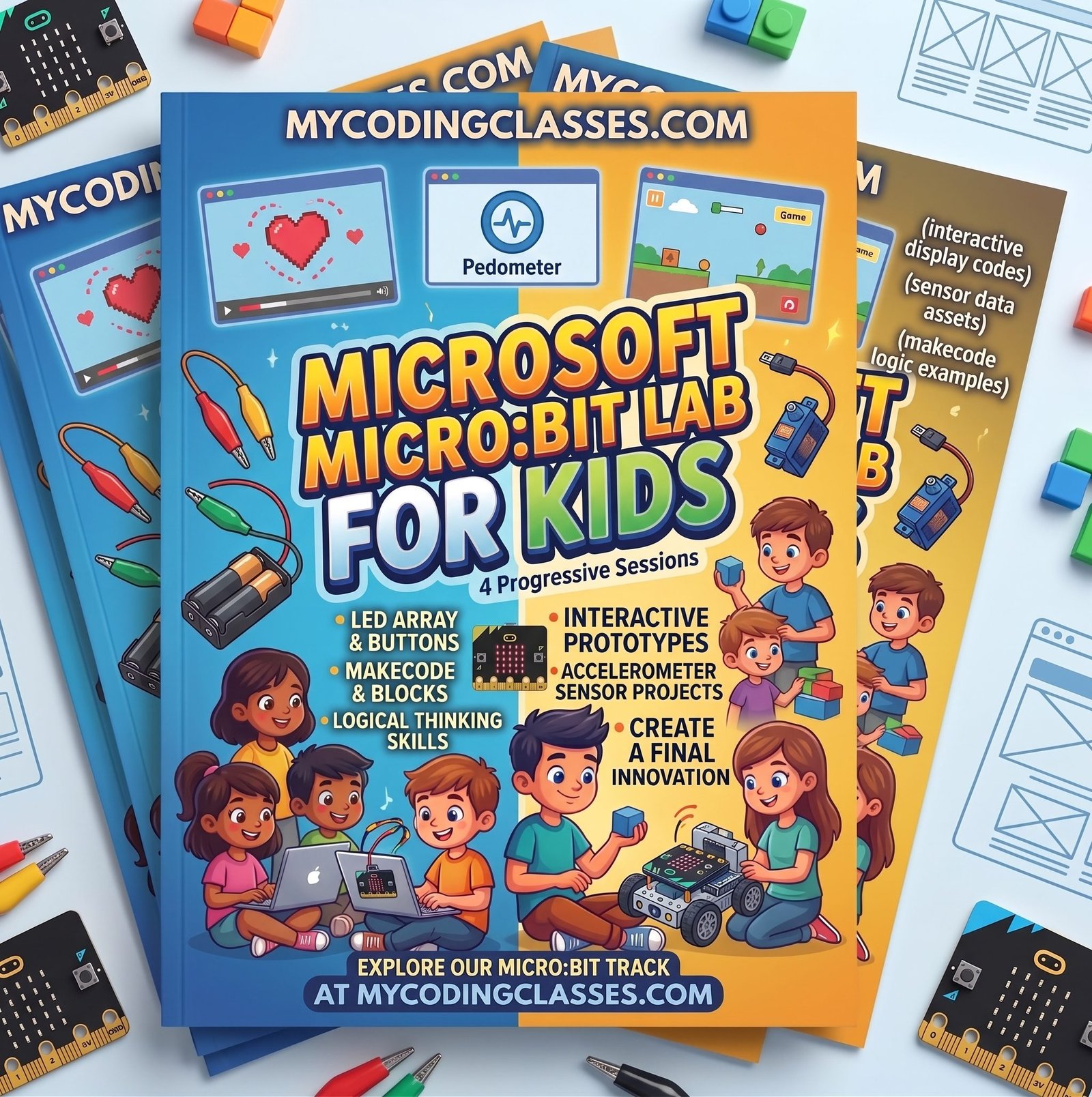
Imagine with Micro:Bit Labs (7-14)
Join our interactive hardware programming and physical computing program created by for young innovators. This course introduces students to the exciting world where software code meets physical hardware—using the pocket-sized BBC micro:bit microcontroller developed in partnership with Microsoft.
Program Highlights:
- Tangible, Screen-to-Physical Output — Bridges abstract coding concepts with immediate, physical hardware reactions kids can hold in their hands.
- Seamless Bridge to Python — Transitions effortlessly from Microsoft MakeCode drag-and-drop blocks to real Python text-based programming.
- Combines Engineering & Creative Invention — Balances computational logic with crafting, physical prototyping, wearable tech, and game creation.
- Low Threshold, High Ceiling — Accessible enough for absolute beginners, yet powerful enough to build advanced IoT and robotics projects.
- STEM & CSTA Aligned — Direct alignment with national computer science standards, physical science frameworks, and engineering design principles.
Ideal for: Perfect for schools seeking a CSTA Aligned curriculum, after-school programs, STEM clubs, and summer camps looking to introduce coding in a creative way.

Motion with Lego® – Block-Based Coding (7-14)
Get ready to build, code, and move! In this hands-on class, students dive into the exciting world of LEGO robotics using motors, sensors, and real-world coding concepts. Kids will design and program their own moving machines—from dancing robots to racing cars—all while learning problem-solving, teamwork, and the basics of engineering.
Program Highlights:
- Tactile & Visual Synergy — Directly links physical gear mechanics with visual software logic.
- Low Floor, High Ceiling — Easy for absolute beginners to start, yet deep enough for complex robotics challenges.
- Proven Educational Hardware — Utilizes official LEGO® Education STEM platforms engineered for classroom learning.
- Screen-Balanced Learning — Combines hands-on physical assembly with focused coding challenges.
- STEM & NGSS Aligned — Direct alignment with Next Generation Science Standards, physical science, and engineering design loops.
Ideal for: Curious kids who love building, tinkering, and making things come to life through coding and creativity.

Explore Planets in Minecraft! (7-14)
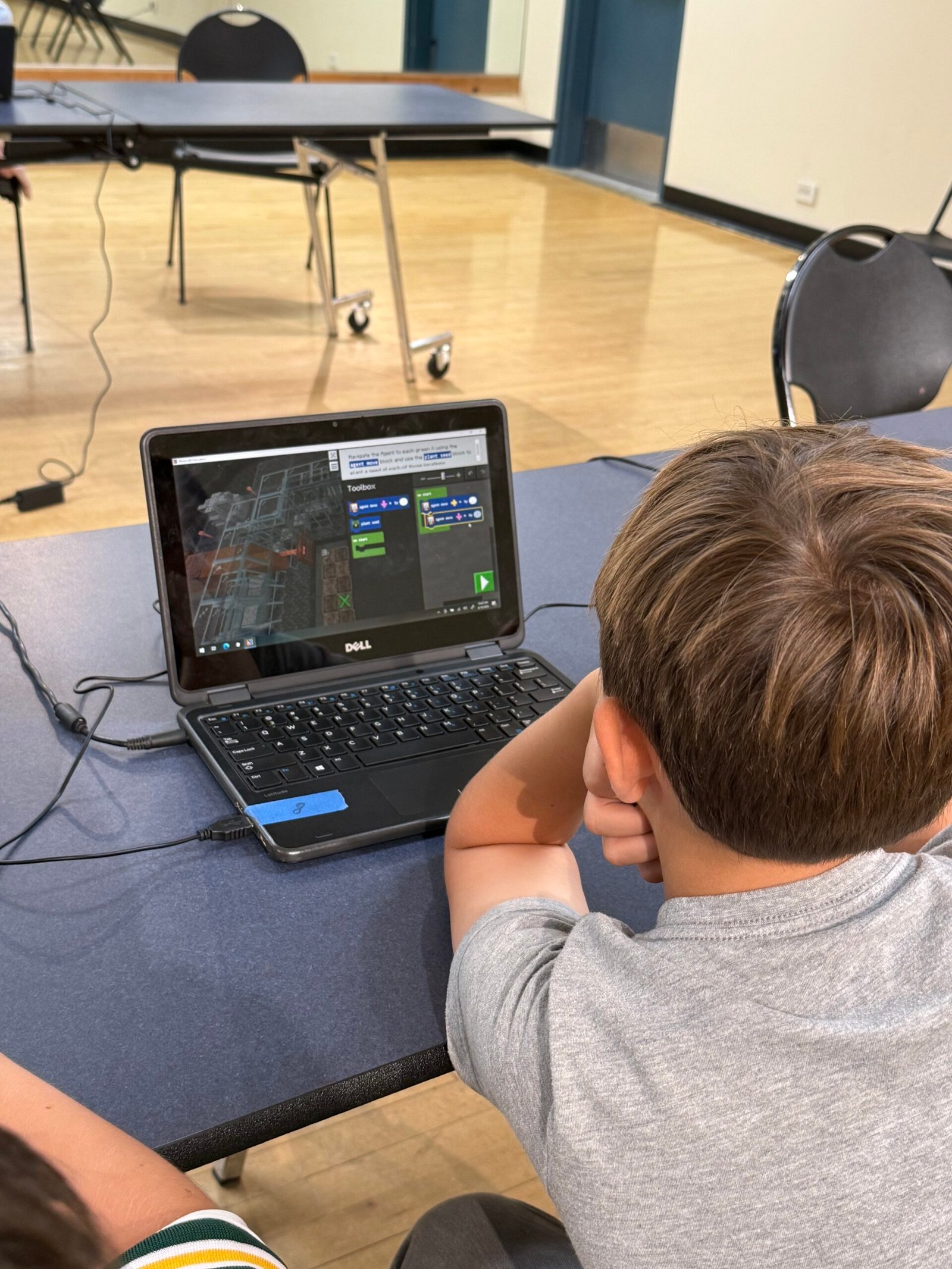
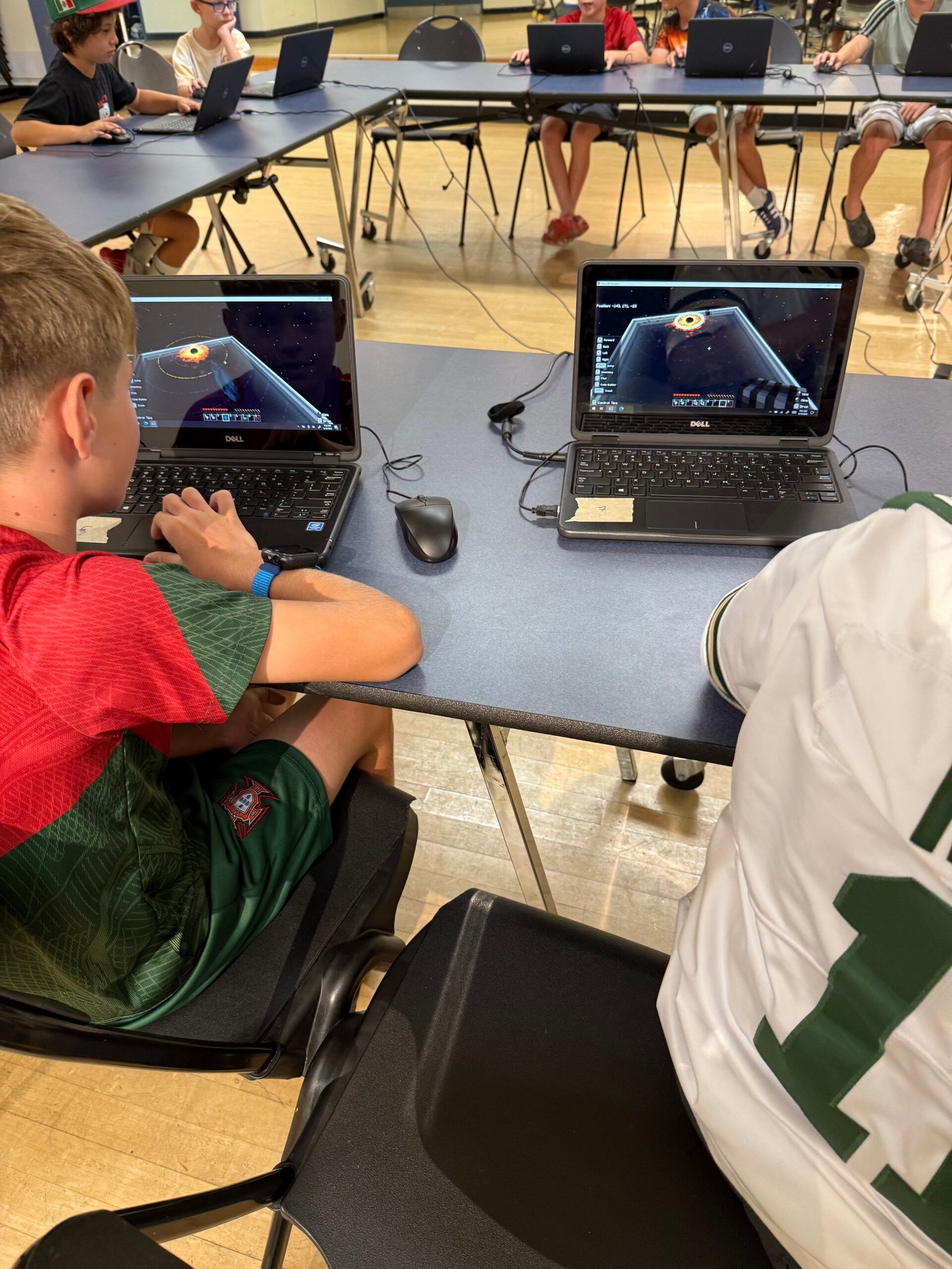
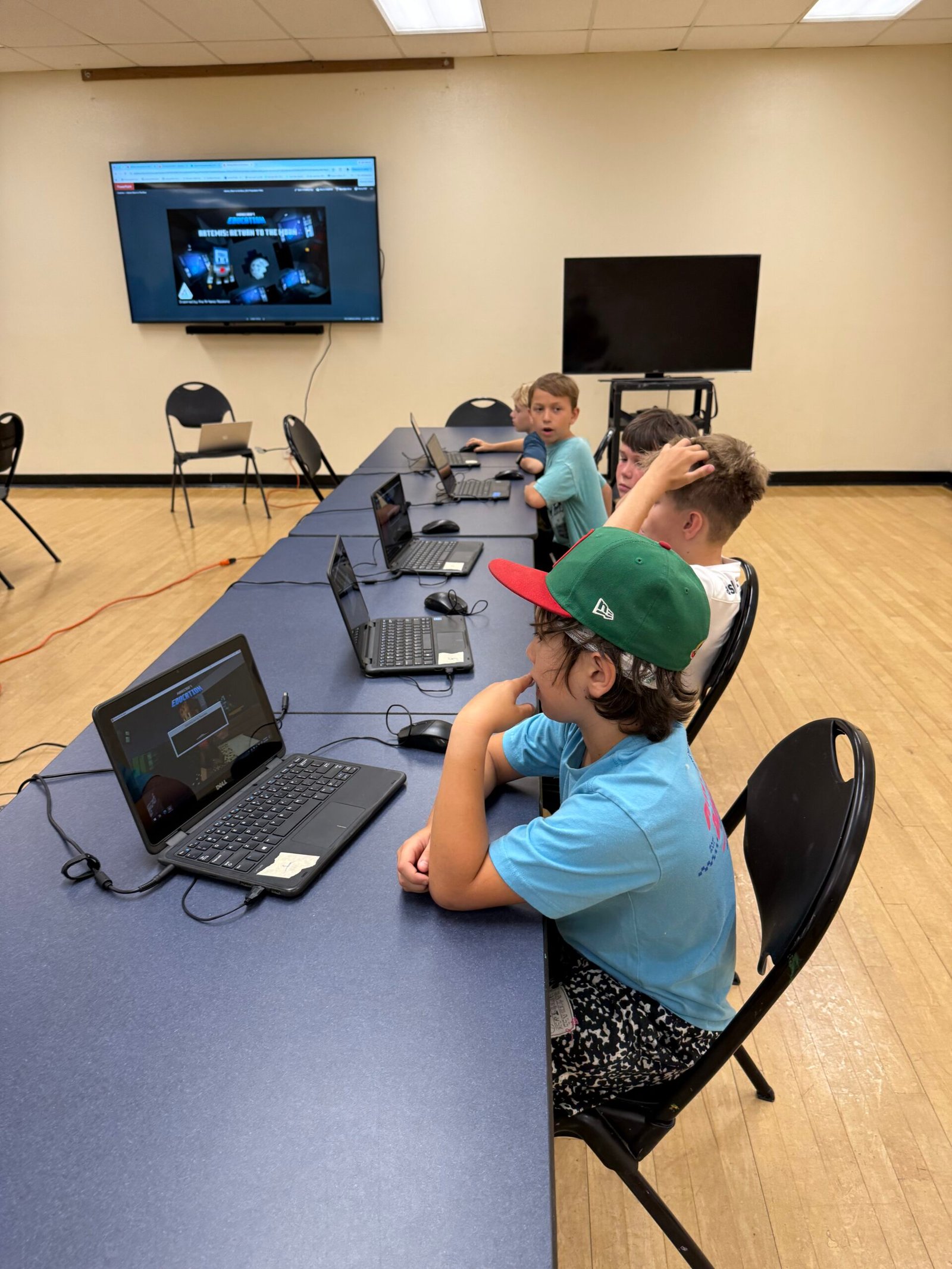
Embark on an official NASA-inspired space adventure! Powered by Microsoft’s Minecraft Education and created in partnership with NASA and the Challenger Center, students use computer science to build Artemis rockets, program Orion space capsules, configure Mission Control, and construct sustainable moon bases on the lunar surface.
Program Highlights:
- Space & Planetary Exploration — Code space stations, pilot rovers, and explore solar systems inside Minecraft Education.
- Block-Based Automation — Write code to build bases, harvest resources, and construct 3D space structures.
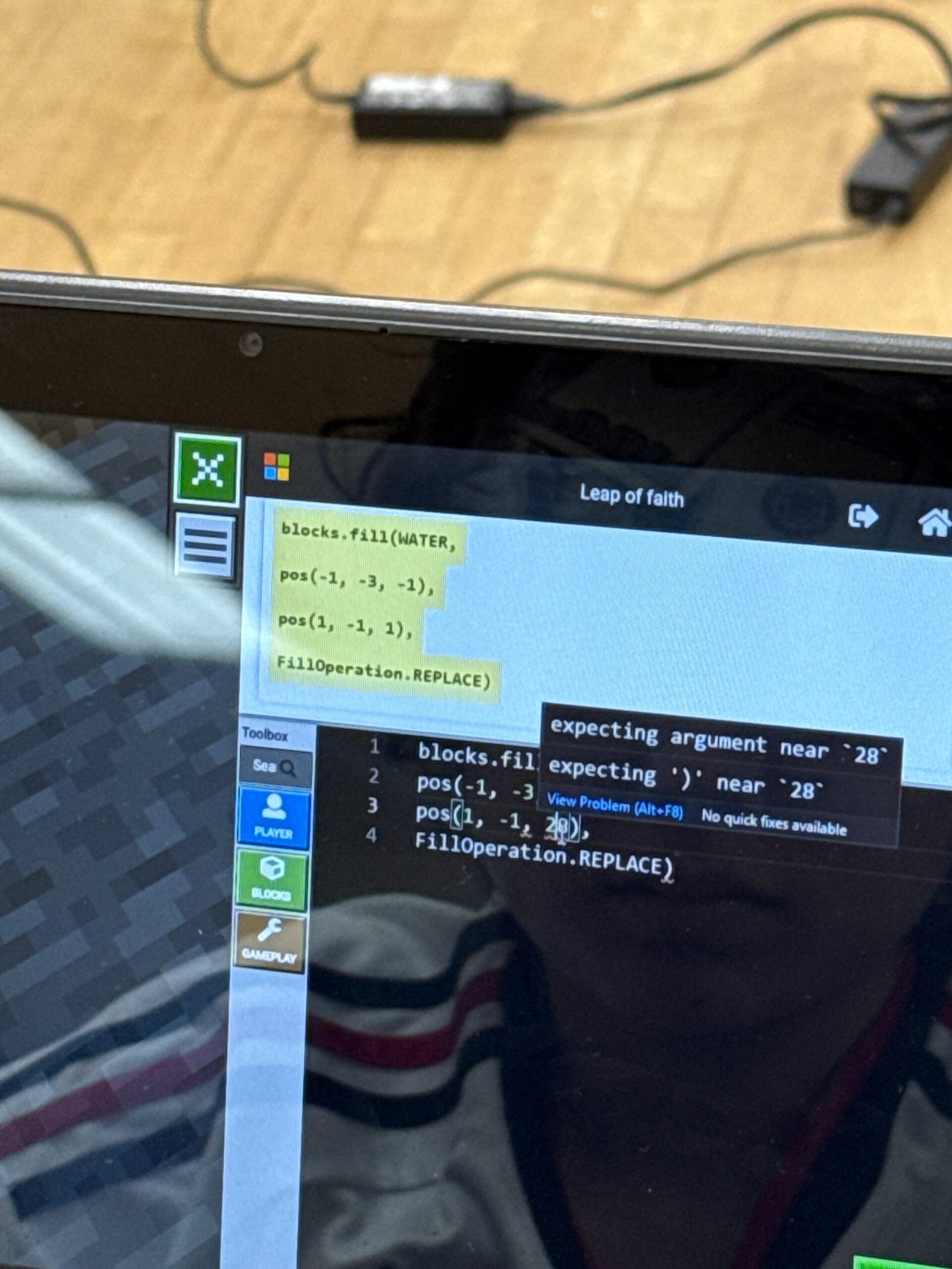
- 3D Spatial & Engineering Logic — Program coordinates, loops, and conditional code to master 3D geometry.
- Collaborative Problem Solving — Team up on space missions and debug code together in secure multiplayer worlds.
- Real-World Coding Concepts — Bridge favorite gameplay with core computer science to prepare for languages like Python.
- CSTA, NGSS & STEM Aligned — Powered by Microsoft Education and mapped to CSTA CS and NGSS Earth & Space standards.
Ideal for: Curious kids who love Minecraft, building, and discovering how code powers the world around them!
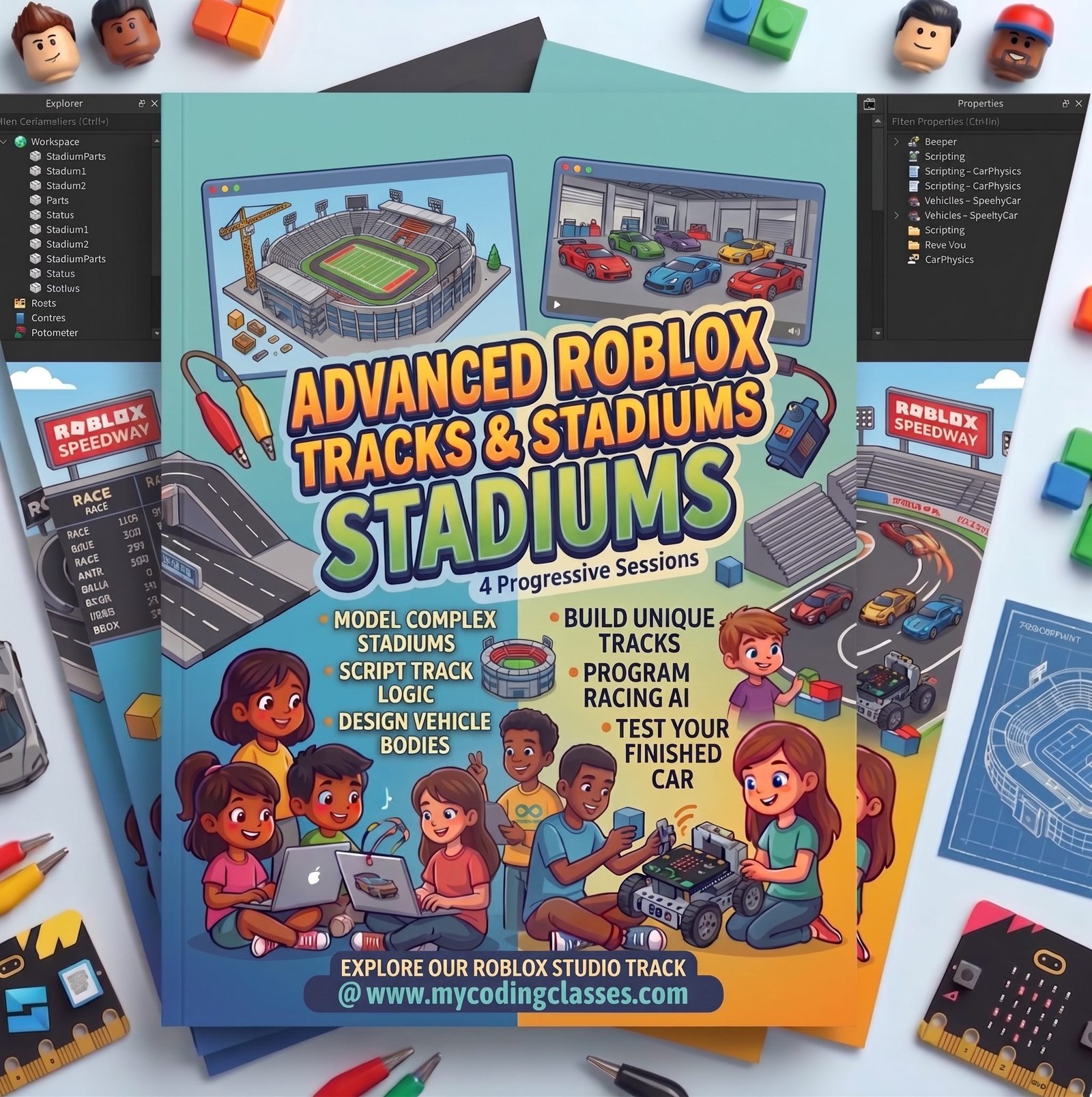
Sports Cars and Tracks in Roblox Studio (7-14)
Rev up your creativity! In this exciting game design camp, students learn how to build, customize, and test their very own sports car race tracks using Roblox Studio’s 3D tools—no coding required.
Program Highlights:
- High-Interest Real-World Platform — Leverages a platform kids already love to teach serious, professional 3D game engineering and Lua scripting.
- Bridge to Professional Tech — Serves as a direct stepping stone to professional game engines like Unity and Unreal Engine, and text languages like Python and C#.
- Combines 3D Art & Computer Science — Balances creative 3D environmental design with rigorous analytical software development.
- Portfolio-Ready Output — Every student creates playable, multi-level 3D games that can be published and shared with friends and family.
- STEM & CSTA Aligned — Direct alignment with national computer science standards, computational thinking, and 3D spatial engineering frameworks.
Ideal for: Creative kids and gamers who love racing games, design, and Roblox!

Create Music with Sonic Pi (7-17)
Learn to code music with Sonic Pi! This program teaches kids how to create beats, melodies, and live performances using programming, blending technology with creativity in a fun, hands-on way.
Program Highlights:
- Text-Based Coding Entry Point — Serves as a fun, low-stress transition from block coding (Scratch) to real text-based programming (Ruby/Python logic).
- Instant Auditory Feedback — Students hear their code execute immediately, reinforcing abstract concepts with auditory rewards.
- Zero Musical Prerequisites Needed — Welcomes both music lovers and tech enthusiasts regardless of prior instrument experience.
- STEM & Computer Science Aligned — Direct alignment with computational thinking, discrete math, and audio engineering principles.
Ideal for: Perfect for schools, after-school programs, STEM clubs, and summer camps looking to introduce coding in a creative way. Great for educators, homeschooling groups, and enrichment programs focused on music and technology.
Find Create Music with Sonic Pi Sessions | Find Music and Design Sessions

Create Designs with Canva (7-17)
Focused on building custom graphic art, presentations, social media layouts, and digital branding assets while naturally absorbing the foundations of graphic design, computational visual thinking, and digital communication.
Program Highlights:
- Hands-On Visual Math — Kids see spatial relations in action through scale, ratios, grids, and alignment.
- Real Digital Foundations — Canva prepares students for advanced creative tools like Adobe Creative Cloud, UI/UX design, and web publishing.
- Problem-Solving Mindset — Iterative editing teaches attention to detail, persistence, and visual communication logic.
- Safe & Accessible — No prior design experience needed; everything is visual, cloud-based, and intuitive.
- Industry-Aligned Curriculum — Supports digital literacy standards, visual communication arts, and creative technology pathways.
Ideal for: Programs focusing on storytelling and creative communication.
Find Canva Designer Sessions| Find Music and Design Sessions
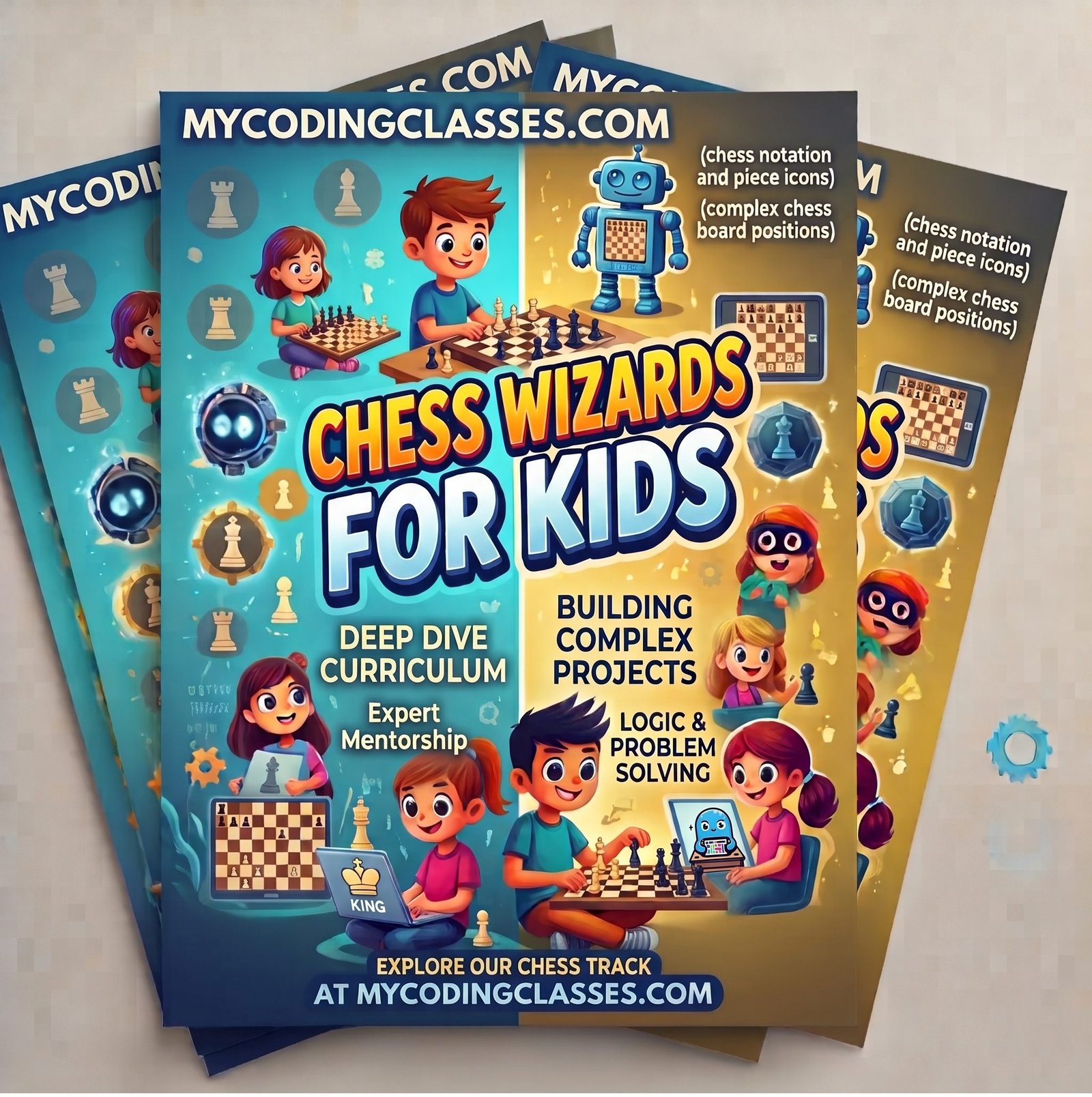
Chess and Logic (7-17)
Through guided board play, interactive tactical puzzles, pattern-recognition challenges, and logic games, students master core chess strategies while developing critical problem-solving habits. By analyzing positions, calculating move sequences, and evaluating risk, participants learn how structured rules create deep, creative possibilities on and off the board.
Program Highlights:
- Pure Unplugged Logic — Builds deep computational thinking, concentration, and focus without screen dependency.
- Bridge to Computer Science — Connects decision trees, conditional logic (
if/then), and grid coordinate systems directly to programming concepts. - Combines Discipline & Creativity — Balances structured, rule-bound calculation with imaginative long-term plans and sacrificial attacks.
- Builds Emotional Resilience — Teaches sportsmanship, patience, graceful handling of setbacks, and thoughtful decision-making under pressure.
- STEM & Academic Alignment — Direct correlation with mathematical reasoning, spatial awareness, and cognitive problem-solving skills.
Ideal for: Perfect for schools, after-school programs, STEM clubs, and summer camps looking to introduce coding in a creative way.

Content Creation and Design: Become an Influencer (8-17)
Empower young storytellers with tools like OpenShot and Canva to create and share engaging stories on YouTube. This program promotes creativity and digital communication skills.
Program Highlights:
- Combines Art & Technology (STEAM) — Connects technical video editing and audio engineering tools with creative artistic expression.
- Fosters Real Digital Literacy — Teaches kids how media is engineered so they can navigate the digital world safely and critically.
- Portfolio-Ready Output — Every student walks away with a personal digital portfolio showcasing their graphic design and video work.
- Safe Sandbox Environment — All project creation and channel designing happen in a safe, parent-approved offline or private environment.
- STEM & Media Standards Aligned — Supports digital literacy, visual design, communication, and technical production standards.
Ideal for: Community organizations or enrichment programs focusing on storytelling and multimedia communication.

Cyber Safe AI (8-17)
This program Use the engaging world of Minecraft Education to explore the world of Artificial Intelligence and Cybersecurity in a collaborative, hands-on learning environment.
Program Highlights:
- Hands-On AI Literacy — Kids program Minecraft AI agents to discover how machine learning, training data, and pattern recognition work under the hood.
- Practical Online Defense — Teaches essential digital safety habits to identify phishing, scam bots, weak passwords, and AI-generated deepfakes.
- Ethical & Critical Thinking — Helps students analyze AI outputs, recognize algorithmic bias, and practice responsible technology use for school and beyond.
- Future-Proof STEM Skills — Prepares kids for an AI-driven world by building early confidence in emerging tech, data privacy, and intellectual property.
- Gamified Safety Curriculum — Uses Microsoft Education tools to transform complex cybersecurity concepts into fun, memorable interactive challenges.
- CSTA & STEM Aligned — Powered by Microsoft Education and fully mapped to CSTA K–12 Computer Science, ISTE Digital Citizenship, and NGSS standards.
Ideal for: STEM-based programs that want to engage kids in exploring cybersecurity and AI in a fun, immersive, and gaming-centered way.

Game Code in Minecraft Education (8-17)
Step into the world of retro game development! Powered by Microsoft Education’s MakeCode Arcade platform, this course teaches kids to design and code their own 2D games—just like the classics. Students build pixel-art characters, program movement and interactions, and create playable games they can share with friends.
Program Highlights:
- Hands‑On Math — Students use coordinates, geometry, and measurement constantly.
- Platformers (run-and-jump games)
- Top-down adventures (maze-style games)
- Arcade shooters and obstacle dodgers
- Real Coding Foundations — MakeCode and Python build strong programming fundamentals.
- Science You Can Explore — Chemistry, ecosystems, and physics come alive through simulation.
- Collaborative Learning — Multiplayer worlds encourage teamwork and communication.
- STEM‑Aligned Curriculum — Supports math, science, engineering, and computer science standards.
Ideal for: Kids who love video games and want to build their own retro-style games while learning real coding logic.
Tech Gurus Aged 11 – 17

Website Wizard: Web Development (11+)
Dive into web development, where we teach students to create dynamic, visually appealing websites using platforms like Visual Studio Code.
Program Highlights:
- Real Professional Tools — Students learn real code in VS Code, not simplified playgrounds.
- Academic & Career Portfolio — Every student completes a live resume site showcasing their goals and hobbies.
- Problem-Solving Mindset — Debugging web code teaches persistence and analytical thinking.
- Safe & Guided Learning — No prior experience needed; we guide beginners step-by-step.
- STEM-Aligned Curriculum — Supports digital literacy, computational thinking, and visual design standards.
Ideal for: Communities looking to prepare students for tech-driven futures in web development and design.
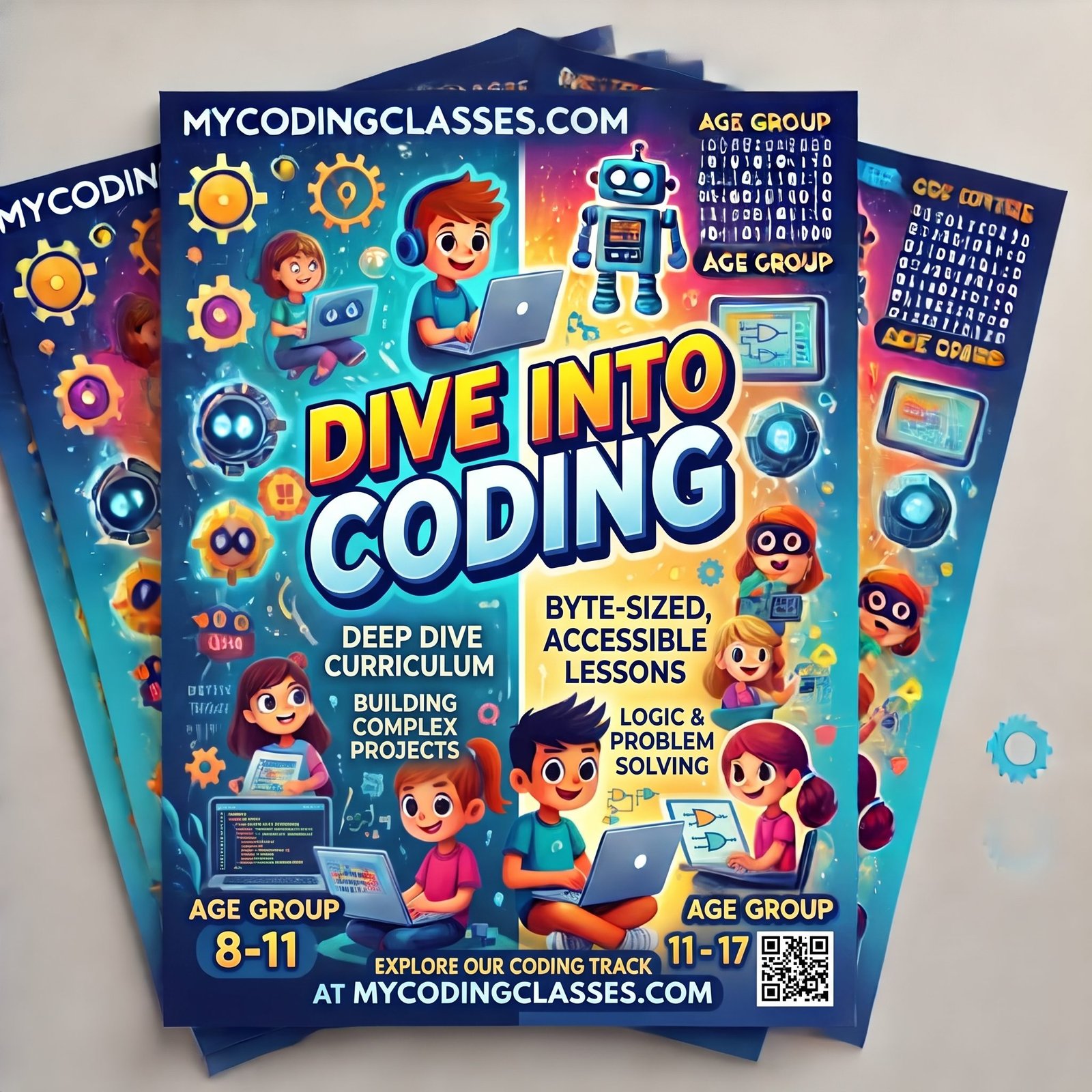
Dive into Coding (11+)
Dive into Coding in an engaging and exciting way for students to learn programming languages such as Scratch, Python, and JavaScript. The goal is to spark interest in the field of computer science, provide foundational knowledge, and help participants gain confidence in their coding abilities.
Program Highlights:
- Scaffolded Learning Curve — Smoothly transitions students from Scratch logic to text-based Python and JavaScript without overwhelm.
- Real-World Tools — Introduces professional code editors, directory structures, and developer workflows.
- Project-Driven Curriculum — Keeps engagement high through hands-on creation: building text adventures, web utilities, and 2D games.
- High School & College Prep — Establishes a strong computer science foundation before AP CS courses and secondary education.
- STEM & CSTA Aligned — Direct alignment with Computer Science Teachers Association (CSTA) national K–12 standards.
Ideal for: Students looking to gain an introduction to coding in an interactive and supportive environment.

Mobile App Development (11+)
This program teaches kids how to design, code, and build their own mobile applications using beginner-friendly tools and coding languages like JavaScript and Python. With hands-on projects, students will develop real-world problem-solving skills, creativity, and a strong foundation in app development.
Program Highlights:
- High-Impact Real-World Output — Empowers teens to build software for the devices they interact with every day.
- Bridge to Professional Tech — Connects visual layout design with real-world text-based programming in JavaScript and Python.
- Combines Logic & Creativity — Balances analytical software engineering with creative user interface design.
- Portfolio-Ready Projects — Every student builds functional, testable mobile app prototypes to feature in academic portfolios.
- STEM & CSTA Aligned — Aligns directly with national computer science standards, computational thinking, and software design principles.
Ideal for: Kids interested in technology and app development, Young innovators who love problem-solving and creativity, Students looking to build real-world coding skills.

Sensor Motor Vehicles (11+)
This program introduces kids aged 11+ to robotics and coding through the development of an automated sensor car using VEX Robotics. Participants will learn how to integrate sensors, motors, and code to create a self-driving vehicle that responds to its environment and navigates autonomously.
Program Highlights:
- VEX Robotics Platform: Learn to program and build a sensor-equipped car using the VEX Robotics system.
- Sensor Integration: Understand how to use distance, touch, and other sensors to enable autonomous vehicle navigation.
- Coding with VEXcode: Develop coding skills using VEX’s block-based or text-based programming environment.
- Motor Control: Master controlling motors to drive the car and interact with its surroundings.
- Problem Solving: Apply critical thinking to troubleshoot and optimize the car’s autonomous functions.
- Project-Based Learning: Build a real, functioning robot that can autonomously navigate obstacles and follow paths.
- Team Collaboration: Work in teams to share ideas, collaborate on designs, and test solutions.
Ideal For: Schools, robotics clubs, and after-school programs looking to teach coding, robotics, and problem-solving through a hands-on, engaging project. Perfect for students interested in STEM and robotics who want to build and program real-world technology.

Learn Python Programming (11+)
This program introduces students aged 11-14 to the basics of Python programming. Through hands-on projects, learners will build a strong foundation in coding, problem-solving, and logic, using Python to create fun and interactive programs.
Program Highlights:
- Introduction to Python: Learn the fundamentals of Python programming language, including syntax and structure.
- Variables and Data Types: Understand how to work with different types of data such as strings, numbers, and lists.
- Control Flow: Learn how to use if/else statements and loops to control the flow of your programs.
- Functions and Loops: Master the use of functions and loops to write efficient, reusable code.
- Project-Based Learning: Build real projects such as games, quizzes, and applications that demonstrate coding concepts.
- Problem Solving: Develop logical thinking and troubleshooting skills through coding challenges.
Ideal for: Schools, coding clubs, and after-school programs looking to engage students aged 11-14 in the world of programming. Perfect for students interested in learning Python and building their own digital creations.

Fortnite Game Development (11+)
This program introduces kids aged 11+ to the exciting world of game development through Fortnite. Participants will explore the creation of dynamic, interactive experiences using the Unreal Engine and learn how to design battle royale environments, customize gameplay, and implement live events. With hands-on experience in game design and development, they’ll gain skills in coding, creativity, and cross-platform collaboration.
Program Highlights:
- Unreal Engine Training: Learn to use the powerful Unreal Engine to create and design game environments and mechanics.
- Game Design Fundamentals: Understand the core principles of game design, from layout creation to gameplay balancing.
- Coding & Scripting: Gain experience in coding and scripting to bring ideas to life and develop game logic.
- Creative Mode Exploration: Use Fortnite’s Creative Mode to design custom gameplay experiences and maps.
- Team Collaboration: Develop teamwork and communication skills through collaborative projects and gameplay design.
Ideal For: Schools, youth groups, coding clubs, and after-school programs looking to engage students in hands-on game development, coding, and creative design. Perfect for summer camps or any group wanting to explore technology and gaming in a fun, educational setting.

Rise of Machines: AI (11+)
Dive into the fascinating world of artificial intelligence (AI) and discover how machines learn, make decisions, and transform our daily lives. This course provides an engaging introduction to AI concepts, machine learning, and practical applications.
Program Highlights:
- High-Engagement Learning Environment — Uses a game world kids already love to introduce cutting-edge Artificial Intelligence concepts.
- Hands-On AI & Machine Learning — Makes abstract concepts like autonomous agents, machine sensing, and algorithm optimization concrete and tangible.
- Smooth Python Coding Bridge — Provides a natural, highly visual bridge from block-based programming to text-based Python syntax.
- Portfolio-Ready Deliverables — Every student completes custom AI agent scripts and automated 3D world builds.
- STEM & CSTA Aligned — Aligns directly with national computer science standards, computational thinking, 3D spatial geometry, and AI literacy frameworks.
Ideal for: Students curious about cutting-edge technology and interested in exploring the foundations of AI and its potential in shaping the future.

Drone Programming and Robotics (11+)
This program introduces students aged 11 and above to the exciting world of drone technology and robotics. Through hands-on projects, students will learn how to program drones, understand the fundamentals of flight mechanics, and explore robotics principles. The course integrates coding, engineering, and problem-solving skills, allowing students to develop real-world applications in autonomous navigation and robotic control.
Program Highlights:
- High-Impact Real-World Tech — Connects software development directly to the fast-growing industries of commercial drones, logistics, and aerospace.
- Pure Physical Feedback — Code errors are immediately visible in 3D air space, reinforcing precise logic and careful debugging.
- Smooth Bridge to Python — Uses intuitive flight commands to make text-based Python syntax engaging and highly rewarding.
- Safety-First Sandbox — All flight sessions utilize lightweight, safe, indoor quadcopters within controlled flight zones.
- STEM & NGSS Aligned — Aligns with national standards for physics, computational thinking, engineering design, and 3D spatial geometry.
Ideal For: This program is perfect for beginners eager to explore coding and engineering in an interactive, hands-on environment, as well as intermediate learners looking to deepen their understanding of automation, AI, and drone technology.

Robot Engineer and Code City Jobs (11+)
This course introduces students to real-world robotics by exploring how robots perform essential tasks in industries like warehouses, sewer maintenance, and hazardous environments. Students will build and program a Code Base robot to complete “dirty, dull, or dangerous” jobs, learning how automation is transforming industries.
Program Highlights:
- High-Impact Real-World Context — Connects robotics and computer science directly to growing industries like smart infrastructure, autonomous logistics, and urban planning.
- Systems-Level Thinking — Teaches kids how individual automated machines interact within a larger, interconnected ecosystem.
- Hands-On Physical Engineering — Bridges abstract code with tangible mechanical outcomes on a shared city grid.
- Smooth Bridge to Professional Tech — Prepares students for advanced high school STEM, competition robotics, and engineering pathways.
- STEM & NGSS Aligned — Direct alignment with national standards for physical science, computational thinking, and engineering design loops.
Ideal For:
This course is perfect for students ages 11+ who enjoy hands-on STEM activities and want to explore automation in real-world applications. It’s designed for creative thinkers, future engineers, and problem-solvers eager to learn how robotics is shaping industries and smart cities.
Coding Courses
Engaging coding classes for kids aged 5-17, both in-person and virtual across the USA.


Unlock Your Potential
Join our exciting coding classes for kids aged 5-17, both in-person and virtual. Explore creativity through tech!

